
Why “Smart Driving” Matters Today
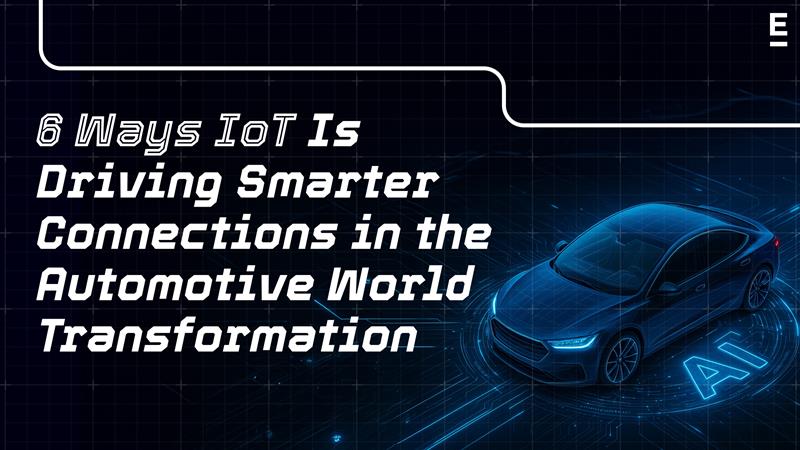
The automotive industry is undergoing one of its most significant transformations, with vehicles evolving into intelligent, connected systems that continuously generate data to understand driver behavior, enhance safety, and enable new digital services. As customer expectations shift toward always-on connectivity, personalized experiences, and dependable performance, automotive businesses must move beyond reactive operations. IoT and connectivity sits at the core of this shift, powering real-time vehicle visibility, predictive insights, and data-driven decision-making that improve operational efficiency, reduce downtime, strengthen customer trust, and create a competitive edge in an increasingly connected mobility ecosystem.
What Is Automotive IoT or the Connected Vehicle Ecosystem?
Automotive IoT refers to the network of devices, sensors, software, mobile apps, and cloud systems that work together to make a vehicle “smart.” This connected vehicle ecosystem includes everything from telematics devices and GPS sensors to mobile apps, EV chargers, and customer service platforms.
It allows real-time communication between the vehicle, the driver, and the business. As a result, companies can track vehicle health, monitor usage patterns, offer app-based features, and create personalized services. A connected vehicle ecosystem empowers automotive leaders to move from reactive issue resolution to predictive, data-driven operations, enabling early fault detection, optimized service cycles, reduced warranty costs, and consistently refine customer experiences.
Here are six ways IoT is enabling smarter, more connected experiences across the automotive ecosystem:
1. For Sales Teams: Ensure No Lead Slips Through the Cracks
IoT-integrated CRM platforms provide real-time visibility into customer actions, from test drive requests to vehicle status updates. Automated workflows prioritize high-intent leads, trigger timely follow-ups, and eliminate manual dependency.
Business impact:
- Higher lead conversion
- Reduced response times
- Better sales forecasting accuracy
2. For Marketing Teams: Run Data-Driven, Personalized Campaigns
Connected vehicle and usage data enables marketers to move beyond generic campaigns. Offers, reminders, and promotions can be triggered based on real vehicle usage, driving behavior, or service needs.
Business impact:
- Improved campaign relevance
- Higher engagement rates
- Better ROI on marketing spend
3. For Operations Teams: Eliminate Fragmented Data and Reactive Workflows
A unified IoT ecosystem connects vehicles, sensors, apps, and dashboards into a single operational view. Teams can track vehicle locations, monitor driver behavior, manage EV charging infrastructure, and plan maintenance proactively.
Business impact:
- Reduced downtime
- Lower operational costs
- Predictable, optimized execution across fleets
4. For Key Decision-Makers: Turn Data into Actionable Intelligence
IoT platforms consolidate operational, vehicle, and customer data into executive dashboards. Leaders gain real-time insights into performance, risk exposure, compliance status, and cost drivers.
Business impact:
- Faster, data-backed decisions
- Improved governance and compliance
- Better long-term planning and scalability
5. For EV Owners: Predictive Maintenance and Reliable Ownership
Connected mobile apps keep drivers informed with real-time battery status, diagnostics, and predictive maintenance alerts. Navigation intelligence further supports efficient routing and service discovery.
Business impact for businesses:
- Fewer breakdown-related service costs
- Higher app adoption and retention
- Stronger post-purchase engagement
6. For EV Businesses: Own the Charging Experience End-to-End
IoT enables businesses to control the entire EV charging journey, from station discovery and availability to payments and load management. Charging becomes a strategic touchpoint rather than a fragmented dependency.
Business impact:
- Increased ecosystem stickiness
- Better energy utilization
- New monetization and loyalty opportunities
Extentia’s Core Use Cases Transforming Mobility
The following anonymized examples from Extentia, a Merkle Company highlight how IoT-led strategies have been translated into scalable platforms that strengthen automotive and mobility ecosystems.
Solution 1: Driving EV Growth Through a Connected, Data-Driven Platform
A leading European e-mobility and EV charging solutions provider, operating across multiple markets and serving both individual EV owners and enterprise fleets, needed to move beyond fragmented digital touchpoints to support its rapid expansion. With a growing network of charging infrastructure, services, and customer interactions, the client required a connected digital foundation that could scale EV adoption while improving operational efficiency.
Extentia implemented a unified, mobile-responsive, multilingual platform powered by real-time vehicle and charging data, bringing together charging, servicing, and ownership journeys into a single, integrated ecosystem.
Impact:
- Increased productivity by reducing operational complexity
- Improved customer engagement and retention
- Scalable, future-ready digital foundation
Solution 2: Enabling Personalized, Proactive Customer Engagement with CRM + IoT
A large, India-based mobility enterprise with a diversified two-wheeler and EV portfolio, operating across multiple business units and customer segments, needed to move beyond fragmented communications and inconsistent customer interactions across its digital ecosystem.
Extentia implemented a centralized CRM layer integrated with IoT-driven vehicle data streams to establish a real-time Customer 360. This enabled personalized communication journeys, proactive service and ownership notifications triggered by live vehicle data, and consistent engagement across mobile, web, and service touchpoints. The solution also strengthened customer segmentation, reduced lead leakage, and improved conversion efficiency across business units.
Impact:
- 1.2+ million mobile app downloads
- 28% increase in registered users
Conclusion
The shift toward connected and intelligent vehicles is reshaping the automotive industry. IoT and connectivity gives businesses the tools to transform everyday operations, enhance customer trust, and unlock new digital possibilities. With connected mobile apps, integrated CRM systems, unified platforms, and predictive insights, automotive companies can build smarter, safer, and more engaging experiences for customers. The future belongs to businesses that embrace the power of IoT and use it to drive meaningful value.
Looking to transform your automotive or mobility ecosystem?
Visit our Automotive Industry Solutions page to discover how we help OEMs and mobility leaders build connected, future-ready platforms for modern automotive enterprises.