
Key Highlights:
- Automotive experience is critical for real-world EV transformation.
- EV enablement goes beyond electrification to software, data, and experience.
- Scalable, customized solutions support long-term growth.
- Full-stack capabilities prevent fragmented digital ecosystems.
- Strong UX and security build trust and adoption.
- Is your digital readiness clear enough to reduce risk and accelerate scale?
Electric vehicles are changing how automotive businesses operate, but not in one single way. It’s not just about electrification. It’s about how software, data, and experiences come together across the entire EV lifecycle.
In our earlier blogs, we spoke about two important aspects of this shift. The first blog focused on why EV leaders are winning the software race, highlighting the real challenges around fragmented systems and slow digital progress. The second blog looked at EV enablement in action, breaking down the architecture, pillars, and use cases that make EV ecosystems work.
This blog moves the conversation forward. Once the problem is clear and the solution framework is defined, the next big question is simple but critical: who should you partner with to make it all happen?
Industry Experience in Automotive
EV enablement is not a generic digital transformation initiative. Automotive organizations work with long development cycles, complex supply chains, dealer networks, and strict regulations. On top of that, EVs bring new layers, battery data, charging infrastructure, connected services, and continuous software updates.
A partner with hands-on automotive experience understands these realities. They know where things slow down, where integrations usually break, and where teams struggle during adoption. This experience helps avoid common pitfalls and keeps transformation grounded in what actually works on the ground. It influences how everything comes together, from internal systems and customer experiences to security, scalability, and long-term support. Some of these ways are:
Customization and Scalability
No two EV journeys look the same. Some organizations are integrating their first connected capabilities, while others are expanding digital services across regions and vehicle portfolios.
A strong EV enablement partner focuses on customization first, integrating existing telematics systems, designing interfaces that reflect your brand identity, configuring dashboards, and building automobile technology solutions that can be tailored for manufacturers, dealers, and end customers alike.
At the same time, these solutions must be scalable by design. Whether you’re adding 100 vehicles or 10,000, entering new markets, or launching new models, a scalable infrastructure can handle growing data volumes, users, and operational complexity without disruption.
This balance ensures EV transformation remains flexible, future-ready, and sustainable, not rushed or restrictive.
Full-Stack Digital Capabilities
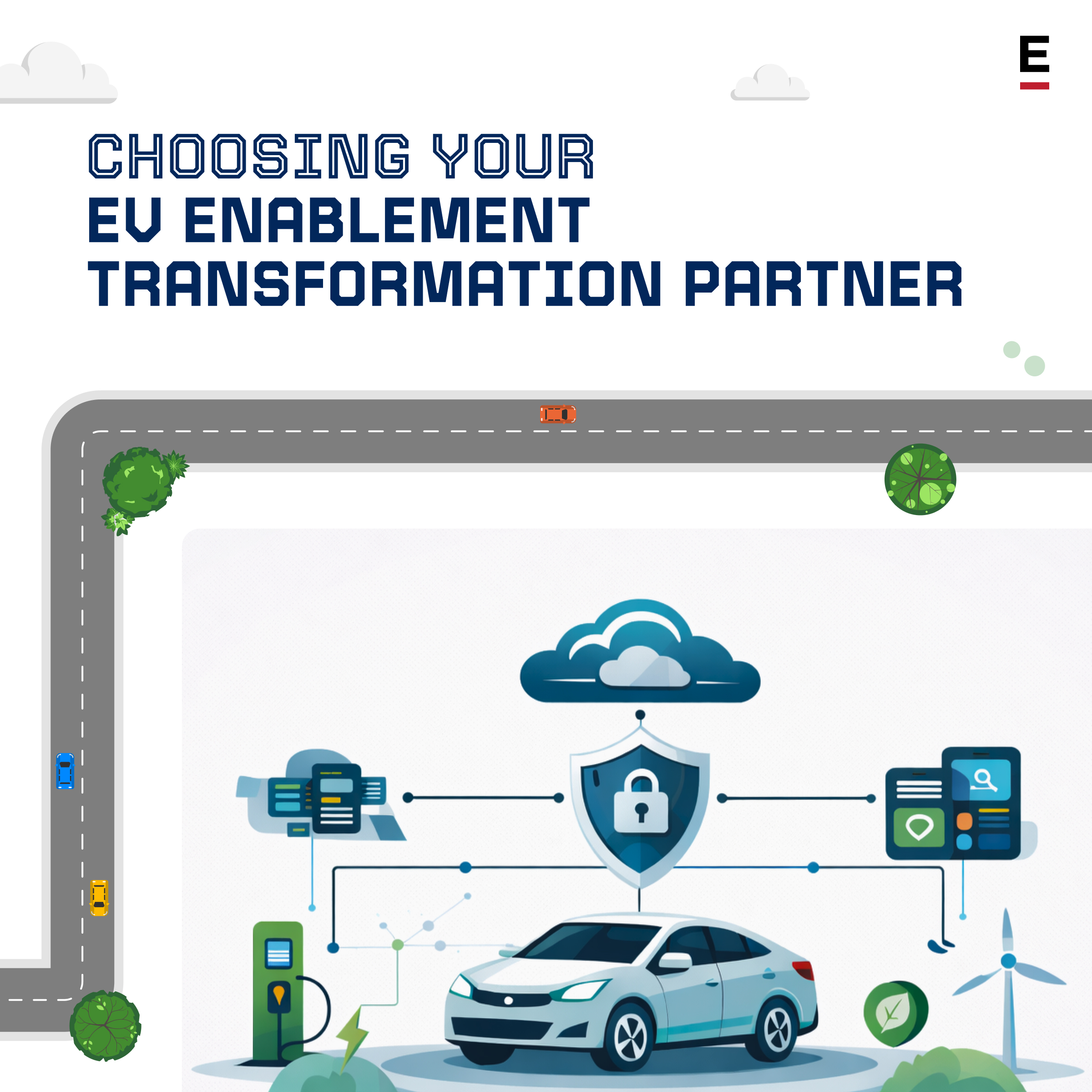
EV enablement touches many layers of technology. Cloud platforms, data pipelines, analytics, AI, IoT, enterprise systems, and customer-facing applications all need to work together.
When these pieces are handled by disconnected teams, gaps appear quickly.
A unified platform approach, built as an integrated ecosystem, brings strategy, design, engineering, and operations together, ensuring seamless execution, faster alignment, and consistent outcomes across the EV and automotive lifecycle. This simplifies execution, improves coordination, and ensures that technology decisions always support business and experience goals, not the other way around.
Integration With Your Existing Tools
Most automotive organizations already have established systems in place, CRM platforms, dealer tools, ERP systems, and third-party solutions. Replacing them entirely is rarely practical or necessary.
An experienced partner focuses on integration, not disruption. By connecting new EV platforms with existing tools in a secure and structured way, they help organizations move forward without slowing down daily operations. This makes adoption easier for internal teams and keeps business continuity intact.
Mobile Optimization and App Support
In the EV ecosystem, mobile applications serve as the primary interactive interface between users and vehicles
A capable EV enablement partner understands this shift. An EV Transformation Partner design mobile experiences that are intuitive, reliable, and built to scale. Just as importantly, they plan for change, so apps can evolve as customer expectations and EV features continue to grow.
UX That Works for Business Teams and Customers
EV platforms are used by more than just drivers. Dealers, service teams, sales teams, and internal stakeholders all rely on digital tools to do their jobs effectively.
Good UX design takes all of these users into account. Consistent design systems across vehicle interfaces, mobile apps, and web platforms reduce confusion and speed up development. When experiences feel familiar and easy to use, EV adoption improves naturally both inside and outside the organization.
Cybersecurity and Data Protection
EV ecosystems generate large volumes of sensitive data, from vehicle performance to customer and location information. Protecting this data is not just a technical requirement, it’s a trust issue.
A reliable transformation partner builds security into the foundation of every solution. This includes strong data protection practices, access control, and compliance with relevant regulations. Security done right allows organizations to innovate with confidence, without putting customers or the business at risk.
Presales, Sales, and Post-Sales Support
EV enablement doesn’t stop once a vehicle is sold. Digital experiences now play a role before purchase, during ownership, and long after delivery.
The right partner helps connect these stages, supporting digital presales journeys, smarter sales tools, and post-sales services such as support, maintenance, and loyalty programs. At Extentia, we bring these touchpoints together through a unified platform and integrated ecosystem approach, ensuring continuity across the entire EV ownership lifecycle.
When these experiences work in sync, customer relationships become stronger, more meaningful, and more enduring.
Sharing Industry Insights Through the EDT Report
At Extentia,a Merkle Company, our work with automotive organizations goes beyond delivery. We spend time understanding how teams operate, where digital initiatives slow down, and what customers actually expect from connected and electric mobility experiences. These insights come from hands-on work across platforms, touchpoints, and transformation programs, not just from trend watching.
This ongoing engagement with automotive firms led us to document what we were seeing on the ground. In 2025, Extentia launched the Experience Design Trends Report for Automotive.
What sets this report apart is its broad view of the automotive landscape. It looks at experience and design trends across multiple segments, including electric vehicles and two-wheelers. The report covers around 19 insights from the two-wheeler sector, 14 key automotive trends and dives deeper into 5 EV-specific trends, all supported by practical, actionable strategies that teams can actually apply.
Next Step: Assess Your Digital Readiness
Every EV transformation starts from a different place. Before investing in new platforms or large-scale initiatives, it’s important to understand your current digital maturity.
A digital readiness assessment helps organizations see what is already working, where gaps exist, and what should be prioritized next. It brings clarity across technology, experience, and operations, helping teams make informed decisions and avoid costly missteps. Whether you are just starting your EV journey or scaling an existing ecosystem, this step provides a strong foundation for long-term success.
How ready is your EV ecosystem to scale?
Get a clear, practical view of your current digital capabilities with a complimentary digital capability assessment from Extentia, a Merkle Company. Contact us today!